
Targeting a Sub 3 Hour Marathon
How you can get there too!

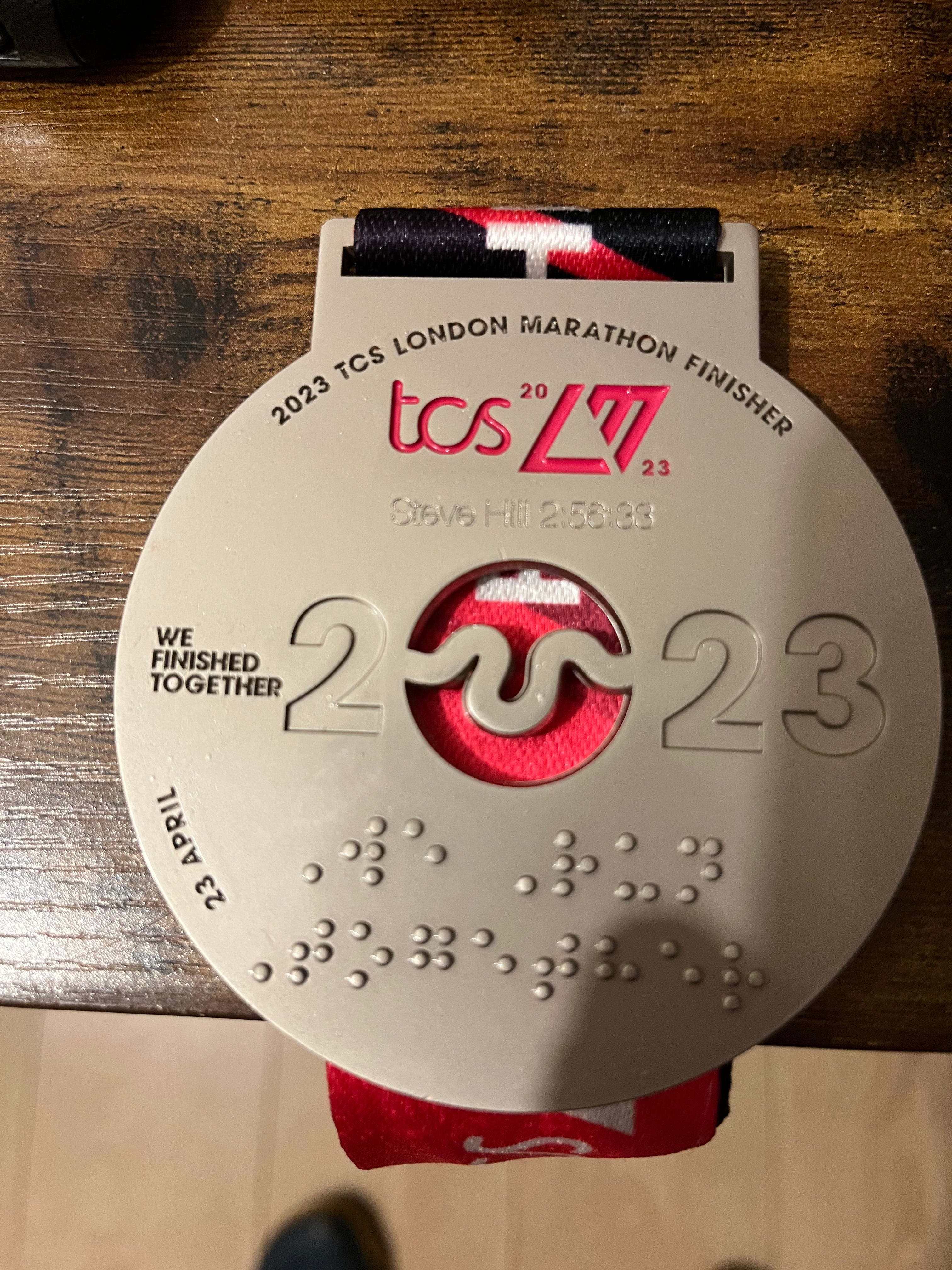
Recently I ran a sub 3 (2:56:33) at London Marathon. I’m still letting that sink in to be quite honest. I was prepared to be writing a post on setbacks about this very goal, that’s how unsure I was that I could hit my pace for all 42.2KM of the marathon distance.
To be totally transparent with you from the start, because I train for middle and full distance Triathlon (Ironman), I had fallen into the trap of trivialising the marathon distance as “just another mass participation event“ so why not target the very lofty sub 3? Your perception of time and distance can get a bit weird when the people you train with see a 2KM swim, 90KM bike ride topped off with a cheeky half marathon as a fairly normal thing to do!
But on the 23/04/23 I found out that the marathon would be the hardest race I have ever done and pushed me to my running limits. But rather than just talking about how to physically train for a sub 3 I think it’s equally valuable to talk about the headspace you need to cultivate to get there. This is because I truly believe that it was my mind that got me to sub 3 more than my body. Either way, we’ll dive into both the mental & the physical in this post to hopefully see where you can also find some hidden speed and/or endurance.
So, how to physically train for a sub 3 distance?
Believe it or not, I would call this part; the easy bit. Don’t get me wrong, you need to set time aside for running long. You need to eat food like it’s fuel, you need to obsess over hydration, pace, heart rate and Vo2 Max numbers not to mention fixing your running form to avoid injury at these distances and intensities. It’s a path less trodden for a pretty good reason, not only do you need genetics on your side but you also need to fully commit to training for it.
So, we should start at the end like any good topsy turvy sci-fi novel does!
We need to work backwards from a very basic first principle from our school days… S = D/T. Those of you who took a liking to Physics will recognise this notation as Speed = Distance / Time. Meaning, we need to figure out our target pace (S) before we can even begin to figure out what we need to do next!
We obviously won’t be shooting for 2:59:59 because even one poorly navigated corner on the course will result in something like a 3:00:02 finish time, we need to build a buffer. The generally accepted sub 3 pace is 4:15/KM or roughly 6:50/Mile average, this will target the finish time: 2:59:10. A nice 50 second buffer for any water bottle fumbles, course navigation issues or getting stuck in a slower pack.
Now we know where we need to be, we need to start where we are. For that we need to baseline ourselves, I have 3 tried and tested suffer fests challenges for you to get your numbers!
Before you embark on any of these tests, I would suggest you get familiar with Training Heart Rate Zones if you aren’t already a HR Zone aficionado.
1KM or 1Mile Time Trial depending on which units you prefer:
This is an all out but well paced effort on a track or flat circuit to benchmark your “threshold“ or Zone 4 pace. A tip for this effort is that after 1KM or 1Mile you should be done with an empty tank but not incapacitated.
Max Heart Rate Test:
This is as you would expect, the hardest of the 3. You need to hold maximal effort for as many 400’s (even 1 x 400 can be enough here) on a track as you can. This is full sprint “anaerobic” Zone 5 pace. Picture Usain Bolt on the 100M and channel that energy!
MAF Test, known as the Maximum Aerobic Function test.
This one is uncomfortable but sustainable. Just like Marathon day pace should be. This test tells us where we are for distance running. Think of this as benchmarking your “tempo” or Zone 3 pace.
Once you have all your numbers you can start putting your own personal plan together. The thing I love about training in this way is that it’s so easy to personalise based on where you are at, at the start of your journey. You can then easily adapt along the way by repeating these tests regularly.
What does this training look like? I need an example!
I hear you, this is a lot of info, how do you apply this to yourself? Let’s put an example together. We’re going to call our mystery runner, Bob.
Bob has his pace numbers and they look like this:
1KM TT - 4:55/KM
Max HR - 194BPM
MAF Test - 5:50/KM
What we can see from this data is that Bob has great potential, a high MAX HR is a great indicator of good underlying base fitness. This means Bob is likely already quite aerobically fit but his pace numbers show there is a lack of pace / power that can be sustained on his run.
What does Bob need to do here? Well, as we said before, MAF is generally the needle we need to move for a distance such as the Marathon. However, his MAF numbers won’t necessarily move with additional training unless we also tackle that 1KM TT time too. As with all things in distance events, you need balance in your skills.
The first thing we need to aim for is increasing that top end speed that Bob cn put out in a TT effort. We ideally want that TT pace to be 1 minute faster than his MAF pace, I won’t go into detail on why this works as Phil Maffetone has bunch of great articles on all of this available via his website. The short version is that your easy effort pace will not increase unless your top end efforts also increase too. Basically, you need to be able to run quite a bit faster than your target long distance pace so that your body understands how & builds muscle accordingly.
We would ideally get Bob to structure his training weeks at the start of his journey as follows, all zones are based on Heart Rate which we can calculate using the Max HR number:
Monday: Rest, stretching and mobility but generally nothing more strenuous than walking or light swimming.
Tuesday: Track / Intervals; use those fresh rested legs to produce the power! Doing something like: 6 x 30s / 1min intervals at Z4 pace with equal recovery jogging in between (10 min warmup & cooldown at easy pace either side of these). This workout teaches the body to flush waste products like lactic acid more efficiently the more you do them. This then means you can run at these paces for longer.
Wednesday: Easy Z2 1 hour run. Running in Z2 will build your endurance and also flush the legs after yesterdays interval set.
Thursday: Gym, we need to hit the iron in order to build power & resilience. This session will target complementary running lifts, the weight used should make 8 reps challenging, bodyweight is also completely fine to start with;
3 x 8 knee over toe lunges
3 x 8 Romanian deadlift
3 x 8 single leg calf raises
3 x 1 min plank & side planks
3 x 8 Squats
3 x 8 Banded clam or side plank with leg closest to the ground raised into a high knee position. These should be felt in the Glute Medius.
Friday: Easy Z2 1 hour run or 1.5 hour Z2 cycle. Pre activation with running form drills and eccentric strength drills. More on running form in a later article!
Saturday: Track / intervals, tempo intervals. Longer 6 x 5min at Marathon target HR Z3 followed by 5 minute jogging rest intervals. (10 min warmup & cooldown at easy pace either side of these) This will start to train the body to sit in that uncomfortable but sustainable pace for longer periods of time and stress the muscles, cardio system & fascia so they all get stronger and more used to the effort.
Sunday: Long Z2 run, this will start at 1.5 hours and slowly build to 2.5+ hours over the course of the training blocks.
As you can see, even the start of a training block for a sub 3 attempt when you need to hit both speed & endurance targets is quite full on. This plan would then adapt on something like a 3 - 4 week cycle as Bobs fitness improves from the sessions. We would start to include target pace intervals as well as increasing the intensity of the interval sessions & ultimately increasing the duration of those long runs. All of this will be a gradual build towards the type of fitness required to sustain that magic 4:15/KM pace over the longer distance.
This is how the physical gains are made to get you towards that elusive <3 hour marathon. However, I think this is less than 50% of the real story of running a marathon at your absolute limit. You need mental fortitude more than anything, not just on race day, you need it in training too.
What’s this psychological side to training all about?
As you can see from looking at the physical side of the equation above, training for a sub 3 or any marathon for that matter will be demanding to say the very least. It will cause you to be tired, sore and a lot of the time you will have to sacrifice doing other things to make it happen. This is where the mental game comes into play!
Cultivating mental fortitude is the distance athletes best friend and I would go as far as to say this is what makes endurance sports as much of an art form as they are a display of physical prowess. When training gets tough, you feel sluggish and tired or the race is starting to go South. You need a strong mental game to adapt and push through. Sometimes, a great mental game also means knowing when to quit.
There is no easy way to develop this skill, it’s unique to everyone of us and requires being out of your comfort zone, for what feels like almost all of the time. I’ve covered some of how I think you can cultivate this mindset in another post. However, I want to give you some practical tips to get you started.
Getting started on this journey is the hardest part, to really build a good mental game you need to make it automatic. So, naturally starting out will be the hardest part. I don’t believe that you need to suffer, but you do need to get comfortable being uncomfortable as the saying goes.
So what can you do?
Feeling tired and sluggish? Go for a run, an easy run, but still… Go run.
Legs hurting due to muscle soreness on a long run? Pick up the pace a little for 30 seconds.
Raining outside & want to run on a treadmill? Go run in the rain… Take a raincoat though, hypothermia is a step too far!
Want to stay up watching Netflix? Stretch out for 30 mins & then go to bed.
Craving a McDonalds? Cook a meal instead.
I know it seems simple when you write it down as a few bullet points, however, simple does not make a thing easy. All of the above suggestions will feel tough in the moment, they won’t make you actually suffer but your brain will make it feel like suffering. However, every time you win that battle against the easy option, you build a little resilience. That action can then act like a domino to another better choice and before you know it, you will be defaulting to better choices.
I know this can all seem very loosely related to running, however, when you hit mile 15 or mile 20 or you get a stomach cramp due to the gel you took 10 minutes ago. You will be able to fall back on this reservoir of resilience you built up during your training. You will be able to have positive self talk in the dark times, you can say to yourself; “come on, just one more mile at this pace & then we can back off a little with more time in the bank. We’ve done it before, we can do it again.”
Or maybe you can leverage this reservoir of resilience when you don’t want to hit the gym for that strength session, because let’s face it, lifting weight & then waiting around to do it again in a windowless room isn’t exactly 2 hours of running in nature! The point being, that the more you do a hard thing, the next harder thing becomes possible. Things you once felt were out of reach, they start to seem doable.
Bringing it all together
Running a sub 3 hour marathon should not be seen as “just another event”. It’s a serious challenge that requires dedication to training and the psychological will to keep pushing when things start to get (very) uncomfortable. It’s the art of the marathon to balance the 2 things just right, and in just the right way for you.
I hope this article shows that you can shoot for that lofty target yourself, it may be a multi-year project like it has been for me. I know I haven’t gone into a tonne of depth here or a step by step guide but I hope it’s valuable nonetheless.
If you would like a breakdown of how I trained for this event and everything that came before, let me know in the comments & I’ll add it to an upcoming blog post!